
"natural shade drying"
900 article(s) found
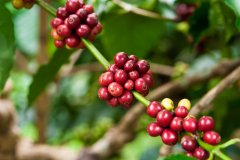
Carmen Manor in Panama
Carmen Manor [Origin]: Panama [Manor]: Carmen Manor [Grade]: SHB, EP [altitude]: 1750 m [soil]: black soil [particles]: 17 mesh [varieties]: Kaduai Catuai 70%, Kaddura Caurra20%, Iron truck Typica, Dwarf San Ramon San Ramon, New World Mundo Novo 10% [Bean treatment]: semi-washed Carmen Manor

Coffee cultivation techniques
Coffee, cocoa and tea are called the three major beverages in the world, and their output, consumption and output value all rank first. In addition to being used as a beverage, coffee can also extract caffeine and coffee oil; in medicine, it can be used as an anesthetic, stimulant and diuretic cardiotonic agent.

Rich and sweet Peruvian coffee flavor manor production area introduces Peruvian organic coffee
Peru's finest coffee is produced in Chaximayo, Cusco, Note and Puno. Most Peruvian coffee is grown under natural conditions, but it is also difficult to confirm the cultivation of all coffee trees. Coffee grown under natural conditions costs 10% more than others and is exported to the United States and Japan. The quality of Peruvian coffee is comparable to that of any kind of coffee in Central or South America. Peru
Cultivation and cultivation of High-quality Coffee
(1) Seedling propagation Coffee seedling propagation can be divided into seed propagation and asexual reproduction. 1. Seed propagation (1) seed collection, seed washing and seed storage during the full ripening period of coffee (the full ripening period of medium-grain coffee in Hainan Island is from February to March, and that of small seed is from September to November). The fully ripe fruits are picked from strong and high-yielding mother trees to make seeds. Immediately after the fruit is harvested, peel and wash the seeds. The method is to place the fruit.

Introduction to taste treatment of brand flavor description in graded production area of Peruvian coffee beans
Peru's finest coffee is produced in Chaximayo, Cusco, Note and Puno. Most Peruvian coffee is grown under natural conditions, but it is also difficult to confirm the cultivation of all coffee trees. Coffee grown under natural conditions costs 10% more than others and is exported to the United States and Japan. The quality of Peruvian coffee is comparable to that of any kind of coffee in Central or South America. Peru

Where is Peru? Peruvian coffee beans describe the flavor characteristics of varieties
A rising star in the coffee industry, Peru Coffee Geography Peru is located in western South America, covering an area of 1285216'2. It is bordered by Ecuador and Colombia to the north, Brazil to the east, Chile to the south, Bolivia to the southeast and the Pacific Ocean to the west. The coastline is 2254 kilometers long. Peruvian coffee is a rising star in the coffee industry. Peruvian coffee is at a temperature of 1826 degrees and annual precipitation of 7001. 50.

A brief introduction to the flavor, taste and aroma characteristics of Katim boutique coffee beans suitable for deep baking
Coffee is a semi-shaded tree species, it is recommended to establish a moderate shade degree of 3040%. In the site environment of growing coffee in our province, it is generally difficult to solve the problem of water conservancy and irrigation. the water season is in the dry season, and it is also the season to compete with other crops for water. It is not easy to rely on irrigation to meet the water demand in the coffee field. It is necessary to loosen the soil in time after the end of the rainy season and adopt dead objects on the ground.

Peruvian coffee with a soft sour taste the flavor and taste of Peruvian coffee the characteristics of the manor area
Peru is located in western South America, with a coastline of 2254 kilometers. The Andes runs from north to south, and the mountains account for 1% of the country's area. it belongs to the tropical desert region with a dry and mild climate. Peruvian coffee is mostly grown at the foot of the Andes, where it is rich in traditional Central American top coffee beans. Peru is a huge and diverse land for them to produce a large number of different kinds.

Classification characteristics of Coffee varieties in Guatemala Flavor introduction to 8 Coffee producing areas in Guatemala
Professional coffee knowledge exchange more coffee bean information please follow the coffee workshop (Wechat official account cafe_style) Guatemala is a major coffee producer in Central America, ranking eighth in the world in terms of coffee production. Guatemala, whose name comes from the Mayan language, means thelandofmanyt, the country of the forest.

The Hope Manor of Panamanian Coffee: Elida Manor Carmen
The Hope Manor is located at an altitude of 1400-1600 meters, with an output of 300,700 bags. Most of the processing is done on the farm, washing and drying in the sun, and the shell, pulp and mucous membrane are used as fertilizer. The estate grows 60% Katula, 20% Katuai and 20% iron pickups and other varieties, the most famous of which are roses in summer and BEST OF PANAMA in 2008
What natural conditions are needed to grow high-quality coffee? How is the coffee fruit grown?
Professional coffee knowledge exchange more coffee bean information Please pay attention to the coffee workshop (Wechat official account cafe_style) what are the natural conditions for growing high-quality coffee fruit? How is the coffee fruit grown? Coffee tree, is a tropical plant, is an evergreen shrub, growing in the equator, latitude 25 degrees north and south, that is, within the Tropic of Cancer. North-South Hui

Taste smooth Peruvian Coffee Flavor Manor characteristics of Organic Coffee Fine Coffee
The country is divided into 24 provinces and one directly affiliated region (Kaya). The names of the provinces are as follows: Amazon

Peruvian coffee producing area, Peruvian coffee introduction
Following Cafe (official Wechat account vdailycom) found that the Beautiful Cafe opened a small shop of its own in Peru, located in western South America, with a coastline of 2254 kilometers. The Andes runs from north to south, and the mountains account for 1% of the country's area. it belongs to the tropical desert region with a dry and mild climate. Peruvian coffee is mostly grown at the foot of the Andes, where it is rich in traditional Central American tops.
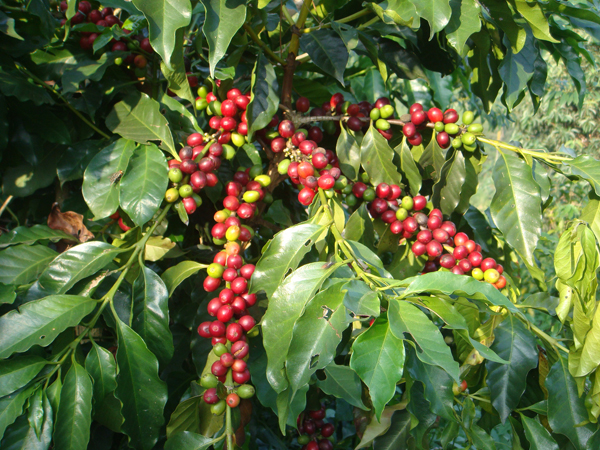
Explain the planting and cultivation of coffee trees in detail to understand the growth environment and needs of coffee trees.
(1) Seedling propagation Coffee seedling propagation can be divided into seed propagation and asexual reproduction. 1. Seed propagation (1) seed collection, seed washing and seed storage during the full ripening period of coffee (the full ripening period of medium-grain coffee in Hainan Island is from February to March, and that of small seed is from September to November). The fully ripe fruits are picked from strong and high-yielding mother trees to make seeds. Immediately after the fruit is harvested, peel and wash the seeds. The method is to place the fruit.

Where are the good coffee beans in Brazil? how about coffee beans in Minas, Brazil?
Professional coffee knowledge exchange more coffee bean information please follow the coffee workshop (Wechat official account cafe_style) Brazil is the world's largest coffee producer accounts for about 33% of coffee production, but because Brazil is located in the tropical rain forest, the terrain is flatter and less high-altitude mountain forests, most coffee is grown in low-altitude non-volcanic soil, and there is not much shade as shade.

Brazil Minas O'Brown (the flavor characteristics and trend of the manor sun-dried beans?
Professional coffee knowledge exchange more coffee bean information please follow the coffee workshop (Wechat official account cafe_style) Brazil Minas-Oberon manor sun beans flavor characteristics and flavor trend? Brazil is the world's largest coffee producer, accounting for about 30% of coffee production, but because Brazil is located in tropical rain forests, the terrain is relatively flat and there are few high-altitude mountain forests, most of which are located in tropical rain forests.

Introduction of Peruvian coffee bean varieties Peruvian organic coffee boutique coffee beans
Peruvian coffee cultivation history is not long, but as a rising star, Peruvian coffee is gradually opening up its popularity and entering the international market. Peru is located in western South America, with a coastline of 2254 kilometers. The Andes runs from north to south, and the mountains account for 1% of the country's area. it belongs to the tropical desert region with a dry and mild climate. Peruvian coffee is mostly grown at the foot of the Andes, where it is abundant.
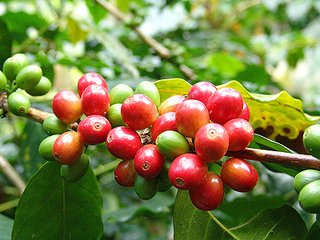
Coffee cultivation and cultivation Coffee cultivation techniques and techniques Introduction to the process of coffee green beans cultivation
(a) seedling propagation coffee seedling propagation can be divided into seed propagation and asexual propagation. 1. Seed propagation (1) Seed collection, seed washing and seed storage In the mature period of coffee (the mature period of medium seed coffee in Hainan Island is 2~3 months, and the mature period of small seed coffee is 9~11 months), fully mature fruits are picked from healthy and high-yield mother trees to make seeds. After the fruits are picked, peeling and seed washing are carried out immediately.
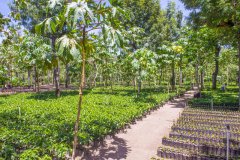
Understand coffee, the first step to become coffee powder, beans producing areas, classification, flavor take you into
Professional barista communication please pay attention to the coffee workshop (Wechat official account cafe_style) Coffee basic type of coffee is a daily drink for many people, living on flat land, it is difficult to see the growth of coffee trees, here are some quick summaries about coffee: Rubiaceae coffee evergreen flowers are white, fragrant coffee beans, are actually the seeds of coffee

El Salvador boutique manor coffee beans Santa Rita Manor washed beans flavor and planting environment
Professional coffee knowledge exchange more coffee bean information please follow the coffee workshop (Wechat official account cafe_style) El Salvador boutique manor coffee beans Santa Rita Manor washed beans flavor and growing environment? Introduction: El Salvador is the smallest and most densely populated country in Central America. Coffee beans are the main agricultural products in most regions, and 60% of the coffee beans are traditional.